

SpaceX IPO Planning: How to Plan Financially for the Upcoming IPO
Key Takeaways:
- Your SpaceX equity is not a single asset: RSUs, ISOs, and NSOs each carry different tax implications, and understanding the difference can meaningfully change your outcome.
- Your state of residency at the time of the IPO can shift your tax bill by hundreds of thousands of dollars. It’s worth planning for before the window closes.
- A strong financial plan goes beyond taxes. It’s about making sure your entire financial picture is positioned to make the most of this opportunity.
If you work at SpaceX, a large chunk of your net worth might exist in SpaceX equity, which can make that money feel more theoretical than tangible. But if an IPO happens, that “future money” can suddenly create very real decisions around taxes, liquidity, concentration risk, and timing.
Even after an IPO, employees and insiders are often subject to lockup agreements that could restrict selling for about 180 days. Your net worth could become “market priced” before it becomes “liquid.”
For many high-earning tech professionals, this is where success starts to feel stressful. The value is real, but the path forward is not always clear.
Your SpaceX Equity Is Not One Asset
One of the big mistakes employees can make is treating SpaceX equity like it’s “one thing” aka a single asset.
In reality, it is often a mix of private shares, stock options, and RSUs…and each one has different tax landmines:
- RSUs are generally taxed like wages when they vest. Think of it like a cash bonus paid in stock. You may have capital gains or losses after vesting if you hold and sell later.
- ISOs may trigger AMT when exercised, even if you don’t sell (a “phantom tax” problem).
- NSOs typically generate ordinary income at exercise.
- High earners often model long‑term capital gains at the top federal rate plus the 3.8% net investment income tax (NIIT) once income exceeds the NIIT thresholds, including $250,000 for married filing jointly (MFJ).
Case Study: Maria, 50 — $6M in Pre-IPO Equity and No Plan Yet
Meet Maria. She’s 50, married filing jointly, with two young children ages 6 and 8. She holds $6 million in pre‑IPO SpaceX equity and hasn’t done much planning. Because it doesn’t feel real yet.
This is more common than most people realize. When your wealth is tied up in shares you can’t sell, it’s easy to delay planning. But IPO year is often when that uncertainty turns into pressure.
Suddenly, RSU withholding may fall short. ISO exercises may create AMT exposure. Lockup rules may delay access to the liquidity you would use to pay taxes or reduce risk.
Maria’s question isn’t just “What will I owe?” It’s “How do I make smart decisions now without creating regret later?”
 What the Tax Picture Could Look Like
 What the Tax Picture Could Look Like
Let’s look at a simple illustration of what taxes could look like once liquidity exists. The point is not to create fear, it’s to make the tradeoffs easier to see before the stakes get higher.
Federally, high earners commonly model 20% long‑term capital gains + 3.8% NIIT (NIIT applies once MAGI exceeds thresholds like $250,000 MFJ).
And because lockups can restrict selling for ~180 days after IPO, one of the best planning moves is simply to build a tax reserve and liquidity runway now. So you’re not forced into rushed decisions the moment the window opens.
The examples given are for illustrative purposes only. Speak with a financial planner to understand how the tax triggers, gains, and impacts apply to your situation.
 The State-Tax Swing: Why Residency Matters in SpaceX IPO Planning
 The State-Tax Swing: Why Residency Matters in SpaceX IPO Planning
Where you live can make a big difference in how much you actually keep after taxes.
For example, California taxes capital gains at ordinary income rates for state tax purposes. Yet, Florida and Texas have no state income tax for individuals.
So if a major liquidity event is coming, your state of residency at the time of sale can meaningfully affect how much of your IPO liquidity you keep.
The illustration below shows just how wide that gap can be.
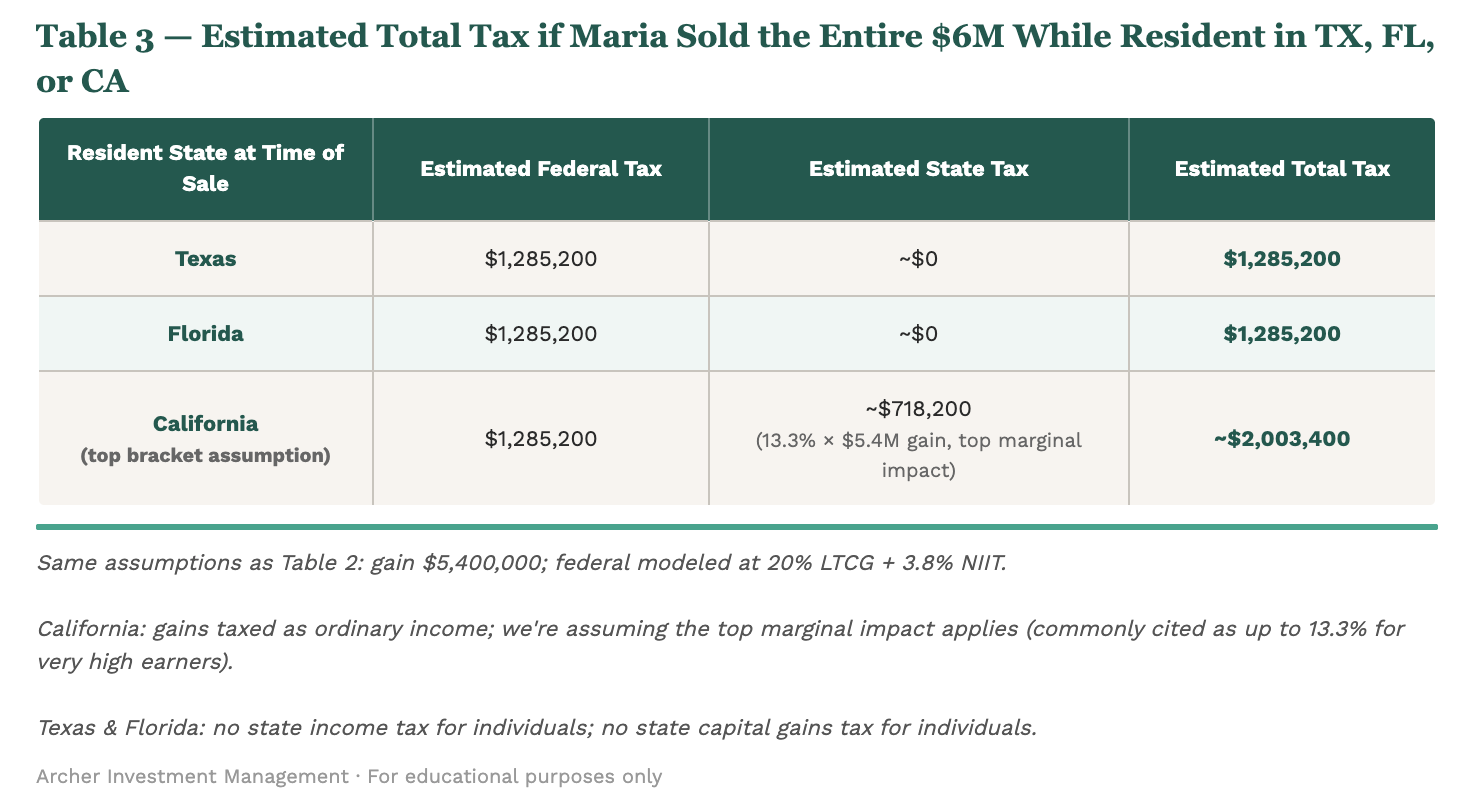 A practical note here: residency planning has to be real. It is not about a last-minute change on paper. If a move is already under consideration, it usually needs to be handled correctly and early enough to matter.
“Do I have to sell everything at once?”
Usually, no.
A thoughtful SpaceX IPO planning strategy aims to:
- Avoid tax surprises
- Reduce the risk of having “too much in one stock”
- Respect lockups and trading windows
A common risk-management tool for concentrated stock is a collar strategy (own the stock, buy a protective put, sell a covered call) to define a floor and ceiling for a period of time. This is helpful when you want downside protection without immediately selling everything.
If you’re subject to blackout windows or insider restrictions, a Rule 10b5‑1 trading plan may help. It creates a disciplined selling approach once trading is permitted, with rules like cooling‑off periods and good-faith requirements.
The goal isn’t to time everything perfectly. It’s to make steady, informed decisions you can feel good about.
 IPO Wealth Is a Life-Planning Moment
 IPO Wealth Is a Life-Planning Moment
IPO wealth is not just an investment issue. It’s a moment that touches your entire financial life.
For Maria, that means more than building a tax-smart equity strategy. It also means making sure the rest of her financial life is ready for what this wealth could make possible.
We would review estate documents, including guardianship language for her children, wills, trusts, and powers of attorney. We’d build a college funding plan that supports her kids without putting her retirement at risk. We’d also review umbrella liability coverage, since a higher net worth can increase the financial impact of everyday risks.
All of that connects back to the equity plan itself. RSUs vest and create tax events while ISOs can trigger AMT.
A strong financial plan connects those moving pieces, so Maria can make decisions with more clarity, avoid unnecessary surprises, and use her SpaceX equity in a way that supports her family and her long-term goals.
Ready to Turn Your SpaceX Equity Into a Clear Plan?
If you’re a SpaceX employee with a large portion of your net worth tied to SpaceX stock, thoughtful planning can help you do more than prepare for taxes.
It can help you make smarter decisions about liquidity, risk, and what this wealth is meant to do for your life.
We help clients turn complex equity compensation into a clear strategy, so they can feel more confident about their money and more free to focus on what comes next.
Schedule a call with our team, which specializes in financial planning for tech executives to turn your SpaceX equity into a clear plan, so you can worry less about money and focus more on the life you’re building.
This article is for general educational purposes only and is not individualized tax, legal, or investment advice. Tax rules are complex and can change, and outcomes depend on your specific situation. You should consult your CPA and/or attorney regarding your circumstances. Archer Investment Management is an SEC-registered investment adviser; registration does not imply a certain level of skill or training. Investing involves risk, including the possible loss of principal.